

Luxury tenants in Dubai consistently prioritize four things above all others: building management quality, privacy, operational readiness from day one, and reduced friction in daily life. Price per square foot barely enters the conversation. Most investors in Dubai's prime rental market focus on the wrong number. They watch gross yield figures, track headline rents, and run price-per-square-foot comparisons while the tenant they are trying to attract has already moved on to a better-managed building. Understanding that gap is what separates a rental asset that compounds quietly over years from one that churns tenants and erodes returns.
The Dubai luxury rental market in 2026 is not short of demand. International executives, regional founders, and families relocating from London, Singapore, or New York: they are all here. But they are selective in ways that mid-market analysis does not capture, and investors who miss that distinction tend to overprice, under-maintain, or attract the wrong tenant profile entirely.
How Luxury Rental Yield Works Differently in Dubai
In Dubai's prime segment, net yield over a five-year horizon consistently outperforms gross yield as a measure of return, because tenant stability and reduced void periods add more value than marginal rent increases.
Rental yield is often treated as a fixed calculation: annual rent divided by purchase price. In Dubai's mid-market, that logic broadly holds. Tenants are price-sensitive, turnover is frequent and the numbers move in fairly predictable ways. In the prime segment, the same formula produces a misleading picture.
What changes the equation at the top end is tenant duration and consistency. High-end renters in Dubai tend to commit to multi-year stays, driven by school placements, regional mandates, or the kind of lifestyle stability that comes with having settled into a city. A tenant who renews for three years at a sensible rate typically delivers a stronger net return than a higher-paying tenant who exits after twelve months. Factor in void periods, re-letting costs, and the wear cycle, and the difference becomes substantial.
Prime areas, including Palm Jumeirah, DIFC and Downtown consistently show this pattern. Properties with slightly lower advertised yields can and do outperform those chasing the top of the market, because stability in the prime segment is its own form of return. For investors evaluating property listings across Dubai's prime neighbourhoods, net yield over a five-year horizon tells a more honest story than the gross figure in any brochure.
What High-End Tenants in Dubai Are Looking For
Luxury tenants in Dubai prioritize predictability, privacy, and operational readiness above size, finish quality, or headline location.
Most high-end renters in Dubai arrive with complex lives and limited tolerance for things that do not work. Many are senior executives or founders. Most have rented in other world-class cities and carry a clear benchmark. What they want, above almost everything else, is predictability.
That starts with building management. A property in a poorly managed development, regardless of how impressive the fit-out, will lose a high-quality tenant faster than anything else. Maintenance response times, lift reliability, backup power, and lobby presentation are tested early. Once trust is lost, renegotiation is unlikely. The tenant simply leaves.
Privacy and density are also significant. A large unit inside a high-turnover tower may be rejected in favor of a smaller residence in a lower-density building where the neighbor profile is consistent and access is discreet. Many owners underestimate how directly this factor influences tenancy length, yet it is one of the clearest drivers of the kind of long-term occupancy that supports stable rental income.
Condition and operational readiness matter more than new finishes. A luxury tenant does not necessarily need the most recently completed apartment. They need one that works without friction from the first day. Air conditioning performance, water pressure, kitchen appliances, and lighting: if these are not right, a mid-market tenant may accept a rent reduction and stay. A high-end tenant will not. They move on quickly, and the cost of that exit lands on the owner.
Amenities That Actually Drive Decisions in the Dubai Rental Market
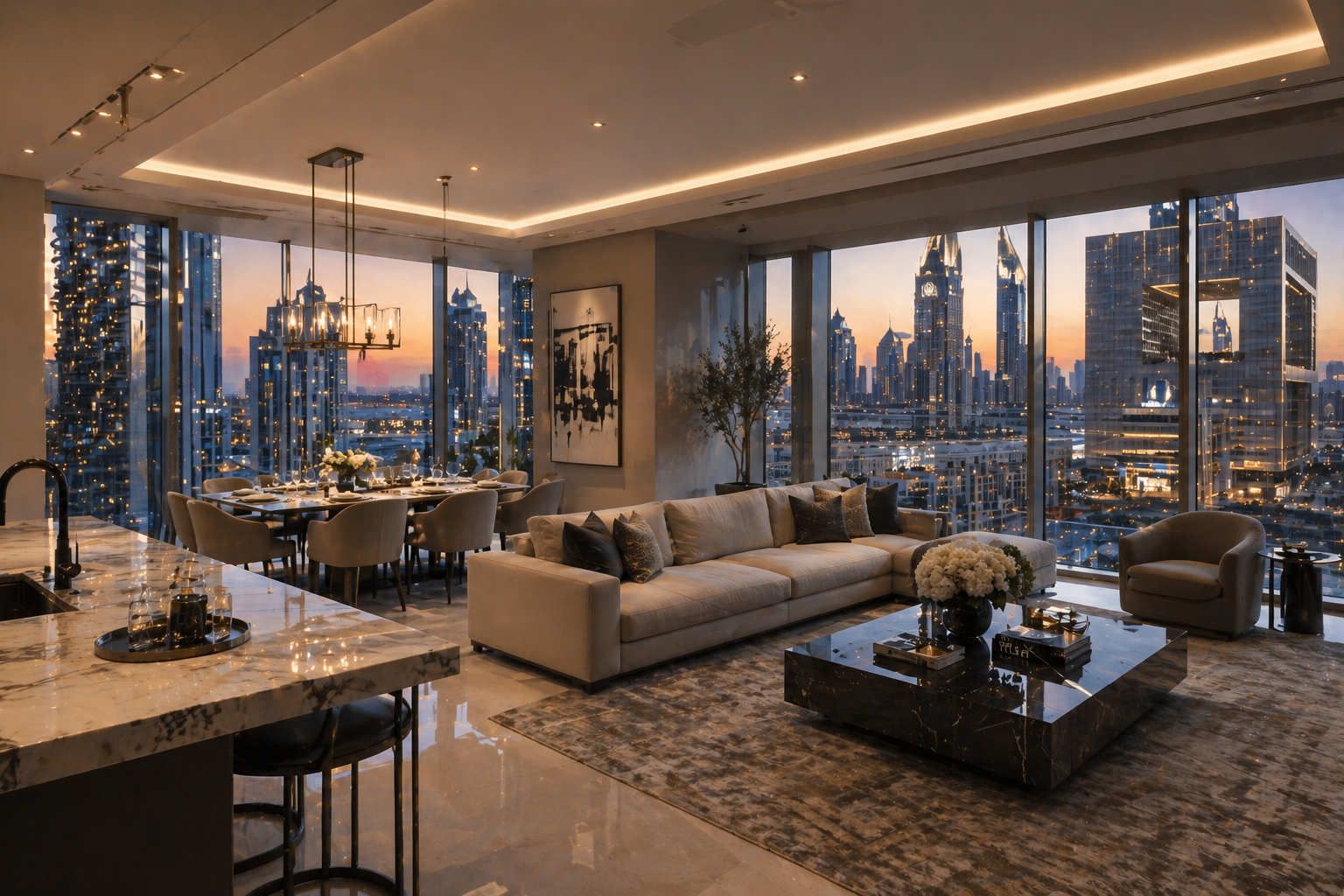
Standard amenities such as gyms and pools are now baseline expectations in prime Dubai developments. What differentiates a property at the luxury end is operational reliability: lift performance, maintenance resolution times, and consistent building standards.
Gyms, pools, and concierge desks are now baseline expectations in any serious prime development. They do not differentiate a property. They only become a liability when they are poorly managed, which in Dubai's luxury segment is a credibility problem that compounds quickly.
What high-end tenants notice and factor into their decisions are operational details. Lift wait times. Whether the building manager directly resolves issues or escalates everything to an absent landlord is another important consideration for high-end tenants. The condition of the communal areas, whether consistently maintained or gradually neglected, is a crucial factor. These things rarely appear in a listing description. They surface within the first month of occupancy, and they determine whether a tenant renews or searches for an alternative.
Location-specific factors also weight differently at the luxury end. In some parts of Dubai, direct beach access or a marina-facing terrace is a genuine differentiator. In others, proximity to a specific school, a private club, or a particular business district carries more influence. The common thread is reduced friction in daily life. The less a property asks of its tenant in travel time, in logistics, and in daily inconvenience, the higher its perceived value and the more defensible its rent.
For a detailed breakdown of which areas consistently attract long-term high-end tenants, the area guides on this site cover the key neighborhoods across Dubai's prime residential market.
Why Mid-Market Rental Strategies Fail at the Top End
Aggressive rent increases, infrequent reinvestment, and treating lease renewals as routine negotiations are effective mid-market tactics that consistently backfire in the luxury segment because high-end tenants read instability and exit rather than renegotiate.
A common and costly mistake is applying mid-market investment logic to a luxury asset. These approaches work in parts of the market where tenants have fewer options and higher tolerance for change. At the top end, they have the opposite effect.
High-end tenants read instability quickly. Constant renegotiation signals that the owner is prioritizing short-term extraction over a stable long-term relationship. The response is not pushback. It is a decision to relocate, often to a building where the landlord takes a more considered approach.
Overinvesting in surface finishes while neglecting fundamentals produces the same result. Expensive materials do not compensate for a poorly managed building or an impractical floor plan. Luxury tenants evaluate the whole experience, not just the photographs. Pricing also carries a signal. A rent set too far below market raises questions rather than attracting interest. At this end of the market, correct pricing is about credibility as much as competitiveness.
Dubai Rental Yields in 2026: What the Data Shows
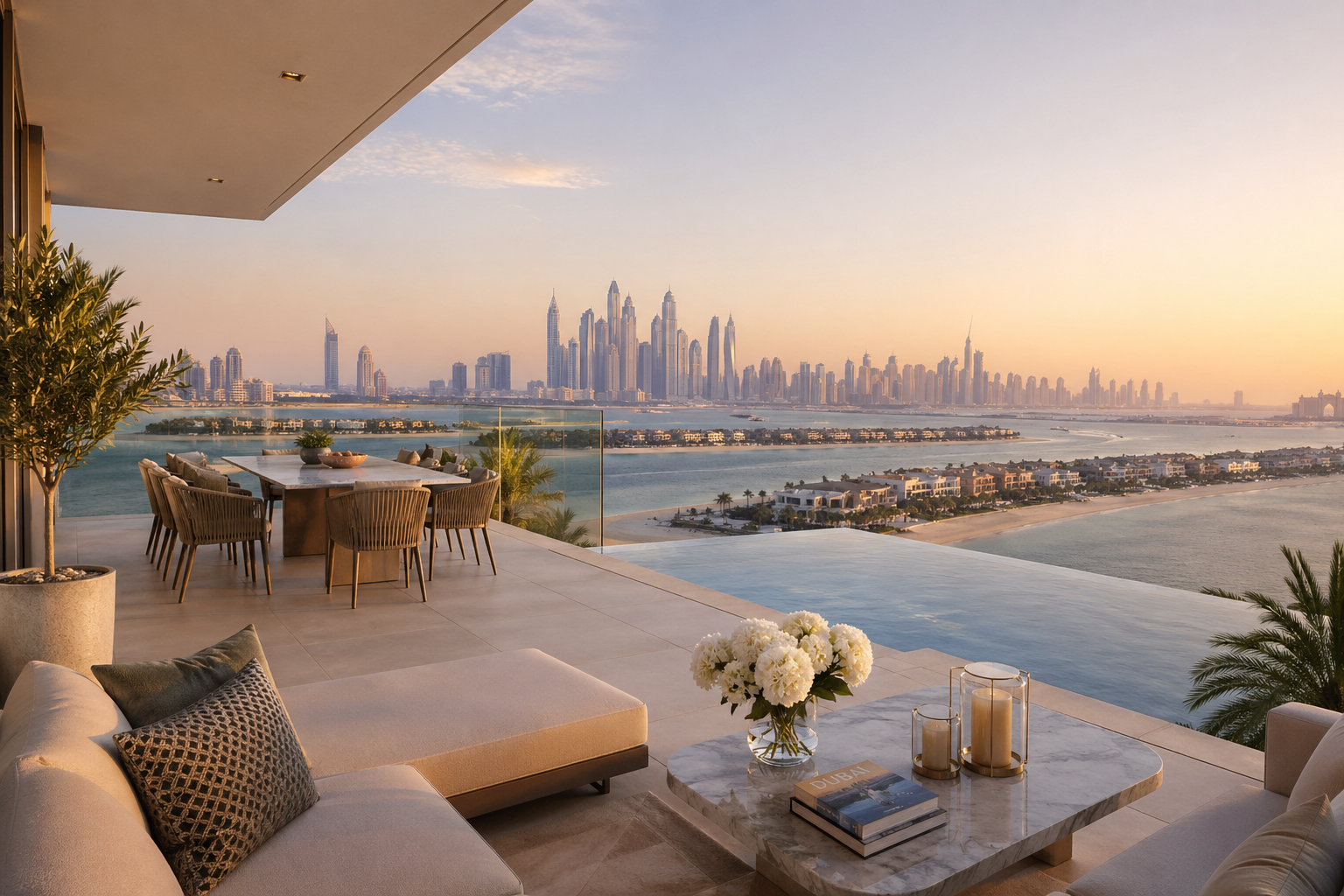
Prime Dubai residential rental demand has remained resilient through 2025 and into 2026, with high-end properties in DIFC, Downtown, and Palm Jumeirah continuing to outperform broader market yield averages on a net basis.
Dubai continues to attract affluent renters who prefer flexibility over ownership, a trend that shows little sign of reversing. According to JLL's UAE Living Market Dynamics report, prime residential rental demand in Dubai has remained resilient through broader market adjustments, supported by continued population growth and an expanding base of high-income professional residents.
Knight Frank's 2025 Wealth Report noted that Dubai ranked among the top three cities globally for ultra-high-net-worth residential relocations, a demand signal that feeds directly into the prime rental pool as new arrivals establish themselves before committing to purchase. Dubai's prime residential rental yields sit broadly in the 5% to 7% net range for well-positioned assets, compared to sub-3% net in London and under 2% in central Singapore, with Dubai's zero income tax environment meaning that figure flows to the investor without deduction.
Areas such as Downtown Dubai, DIFC, and parts of Palm Jumeirah are seeing sustained demand from tenants who are not responding to short-term price movements. They are committing to locations based on quality of life, business proximity, and the longer-horizon certainty that comes with a well-managed prime address. That demand profile supports rental yield stability even in periods when gross yields across the broader market compress.
For investors who entered early or bought off-plan in established prime developments, the combination of capital appreciation and consistent rental income has delivered returns that outperform most comparable global markets on a net, after-tax basis.
How to Position a Luxury Rental Asset for Long-Term Performance
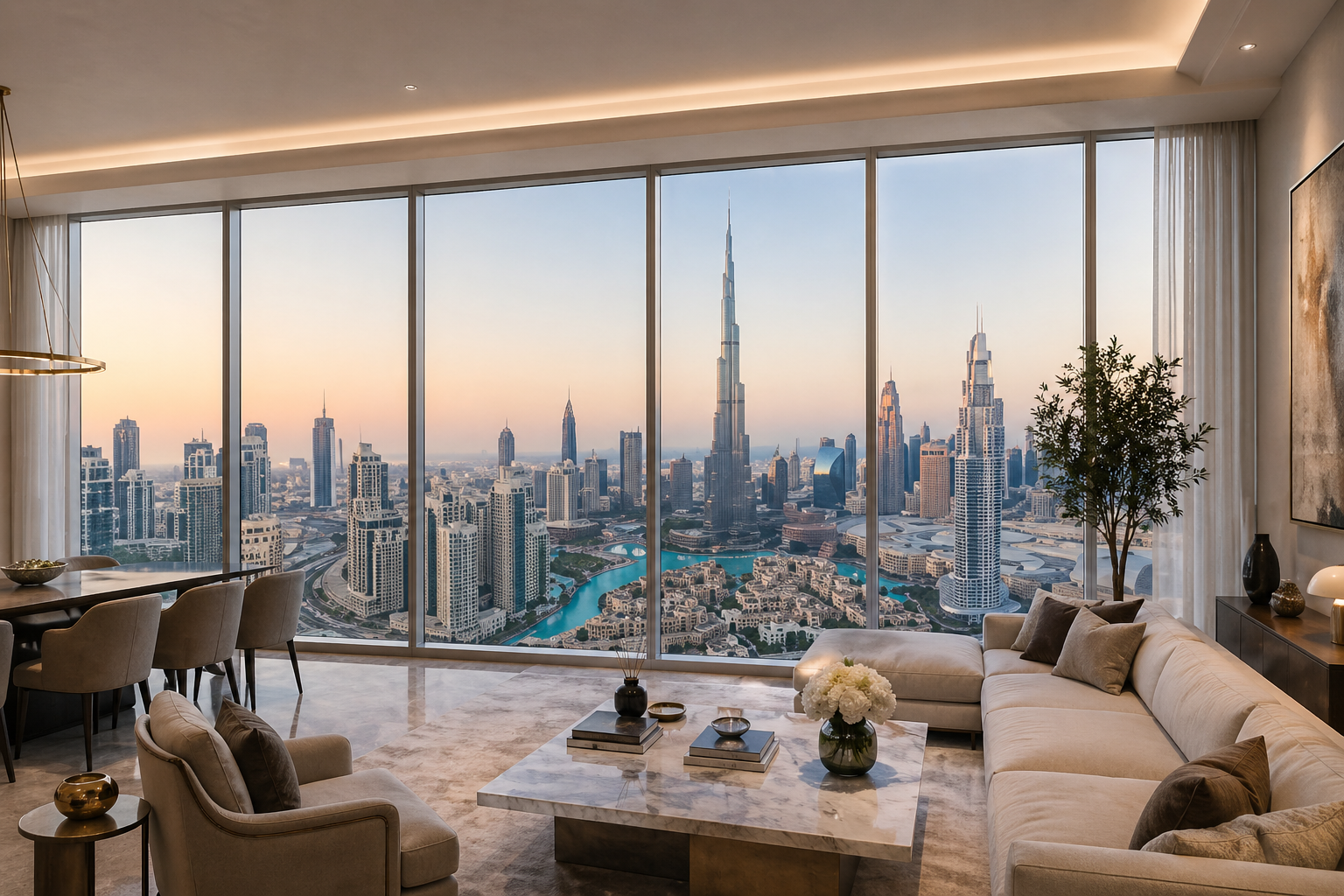
Luxury rental assets in Dubai perform best when managed actively: priced for credibility, maintained consistently, and let to tenants selected for quality over willingness to pay the highest rent.
Treating a prime rental property as a passive holding is the fastest way to underperform. The investors who achieve the strongest results in this segment set prices that reflect quality rather than urgency, invest consistently in maintenance rather than waiting for problems to accumulate, and focus on tenant quality over rent maximization.
A high-quality tenant who treats a property as a home reduces refurbishment costs at the end of each tenancy, minimizes void periods between leases, and often becomes the source of referrals to other similar tenants. Over a ten-year holding period, those factors can easily outweigh the benefit of pushing rents to their ceiling.
The Dubai rental market in 2026 rewards owners who understand how value is defined at the top end of the market and how different that definition is from what drives decisions in the broader residential sector. Investors who align their strategy with how luxury tenants actually think will continue to see their properties outperform. Those who apply mid-market logic to prime assets will keep wondering why.
For investors considering their next acquisition, our latest market insights and investment guides cover current conditions across Dubai's prime neighborhoods in detail.
Frequently Asked Questions: Dubai Luxury Rental Market
What do luxury tenants in Dubai look for in a rental property?
High-end tenants in Dubai consistently prioritize four factors: responsive building management, privacy and low-density environments, operational readiness from day one, and minimal friction in daily life. Finish quality and square footage matter less than whether the property works reliably and fits into the tenant's wider lifestyle without inconvenience.
What rental yield can I expect from a luxury property in Dubai in 2026?
Well-positioned prime residential assets in areas such as DIFC, Downtown Dubai, and Palm Jumeirah typically deliver net yields in the 5% to 7% range, depending on purchase price, service charges, and occupancy. Because Dubai applies no income tax on rental earnings, these figures represent the actual return to the investor without deduction.
How long do high-end tenants typically stay in a Dubai rental?
Luxury tenants in Dubai tend to commit to longer tenancies than mid-market renters, often driven by multi-year executive roles, school placements, or regional mandates. Where a mid-market tenant may move annually, a high-end tenant in a well-managed property commonly renews for two to four years. That duration materially improves net yield by reducing void periods, reletting costs, and refurbishment cycles.
What makes a prime Dubai rental outperform the broader market?
The strongest-performing prime rentals share three characteristics: consistent, professional building management; a tenant profile that is stable and long-staying; and pricing that reflects credibility rather than urgency. Properties that chase the top of the market on rent tend to experience higher turnover. Those that price correctly and invest in maintenance tend to deliver stronger net returns over a five-year holding period.
Is Dubai's luxury rental market still growing in 2026?
Demand in Dubai's prime rental segment has remained resilient into 2026, supported by continued population growth, expanded long-term visa programs, and Dubai's position as the leading destination for ultra-high-net-worth relocations in the region. Supply of genuinely well-managed prime stock remains the binding constraint, which continues to support occupancy and rent levels.
Key Takeaways for Investors
1. Lead with net yield, not gross. Tenant stability in the prime segment reduces voids and maintenance costs in ways that gross yield calculations never show.
2. Management quality is the product. High-end tenants are evaluating the building's operations as much as the apartment itself. Weak management costs more than any rent increase will recover.
3. Price for credibility. A rent set too low signals problems. Correct pricing at the top end is a trust signal, not a concession.
4. Tenant quality compounds. A long-staying, well-qualified tenant reduces refurbishment cycles, minimizes voids, and supports capital value over a ten-year hold.
5. Dubai's tax structure is a structural advantage. Net yields of 5% to 7% with zero income tax outperform most global prime markets on an after-tax basis.
Ready to Invest in Dubai's Luxury Rental Market?
Mavrix Properties works with investors looking to build and manage high-performing prime residential portfolios in Dubai. Get in touch to discuss how your investment strategy aligns with where the luxury rental market is heading.